Sun, Nov 22, 2020
Crafting D&D Adventures and Maps
For the past few weeks I’ve been Dungeon Master (DM) for a virtual Dungeons & Dragons (D&D) campaign with some family and friends. It’s been a lot of fun acting out characters, world building, and crafting adventures for my players to walk through. In my experience there are three main things a good adventure needs: locations, characters, and monsters. I thought I’d share how I built each of these elements for my players to walk through, and the tools I used to build them.
Locations
When trying to establish a location for players to explore I like to use a mix of maps, and verbal descriptions of the location to convey where they are located. Maps are especially useful on combat situations, helping locate the players and monsters in space. To make a map usually start with a sketch on paper to outline the major features of the location.
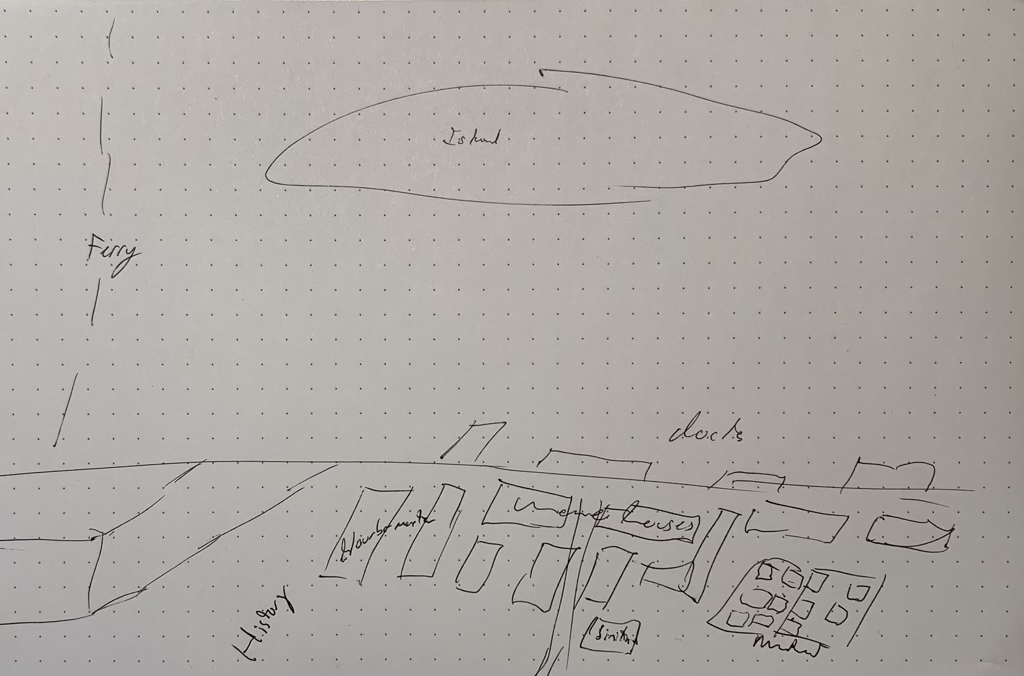
A sketch I made of Preston, a city in my world.
Click to embiggenOnce I have that sketch, or at least an idea of the major features I want to include, I make a high fidelity version with either DungeonDraft (for local maps) or WonderDraft (for city or region maps). These are excellent pieces of software that allow you to build thematic maps quickly and easily.
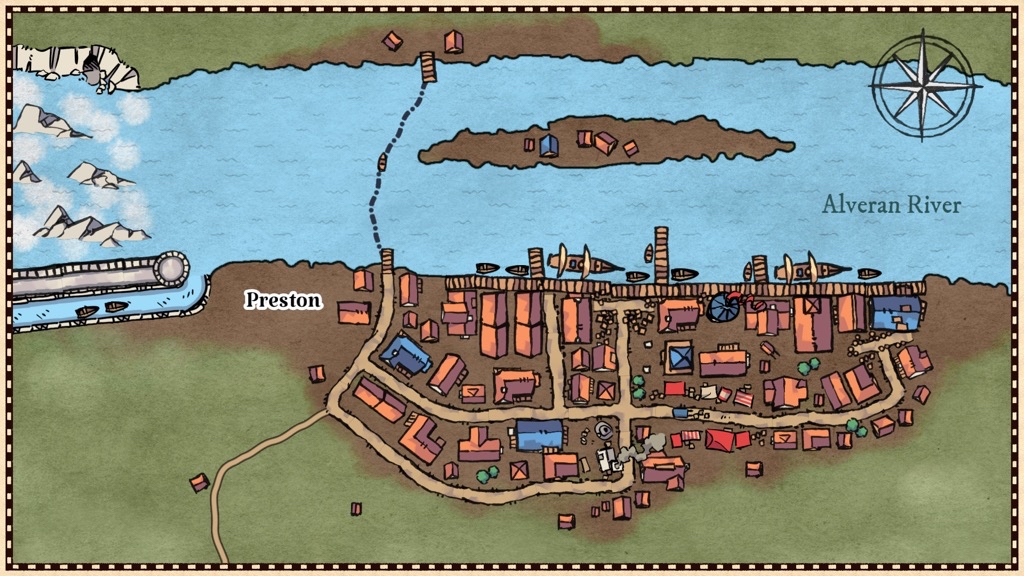
Here is the high-res version of Preston built with WonderDraft
Click to embiggenTo enhance the maps, or provide descriptions of locations where I don’t have a map, I also provide descriptions of the location. This involves a combination of adlibbing from some basic notes, and describing some thematic events to help set the tone. I have lists of events I’ve brainstormed for different areas, like on roads, or in cities. So as the players travel down the road, I may describe some of the traffic they see.
Some of my events for travellers on the road
- A cart sits overturned by the side of the road and two dwarves are arguing around it
- A cart full of timber heads in the opposite direction, a bard sitting atop it singing a song about two long lost lovers
- Poor halflings travelling and begging
Or when the players enter a cathedral, I may describe its layout.
Notes on the Temple of Waukeem
A large cathedral dedicated to the warship of Waukeen, goddess of traders and travellers. Because of her role, the cathedral also holds small shrines dedicated to the warship of various foreign gods so that travellers may find solace while they travel.
Characters
The non-player characters (NPCs) in my stories come in two basic flavours, bit characters who won’t have any plot impact, and mainline characters with internal motivations and goals. I generate the bit characters with an online NPC generator to quickly get some descriptive elements. I’ll tweak them a bit to better fit their role, for example changing a characters profession. I have a list of these NPCs pre-built in Notion for easy access.

Pre-generated NPC
Click to embiggenFor my main story characters I use an approach recommended by the Dungeon Masters Handbook. I outline a sentence or two in different areas that help outline the character. For example describing how the character interacts with others, or the characters ideals and motivations. This lays down how a character interacts with their environment and what the character’s goals are. This is much more fluid then trying to build dialog trees and less time consuming. It allows the PCs to be more creative in how they extract information from a character. It sometimes requires a bit quick thinking on the DM’s part, but its totally worth it. I combine this description with a picture (searching something like “D&D merchant” in google images gives great results) and log it in Notion for easy retrieval.
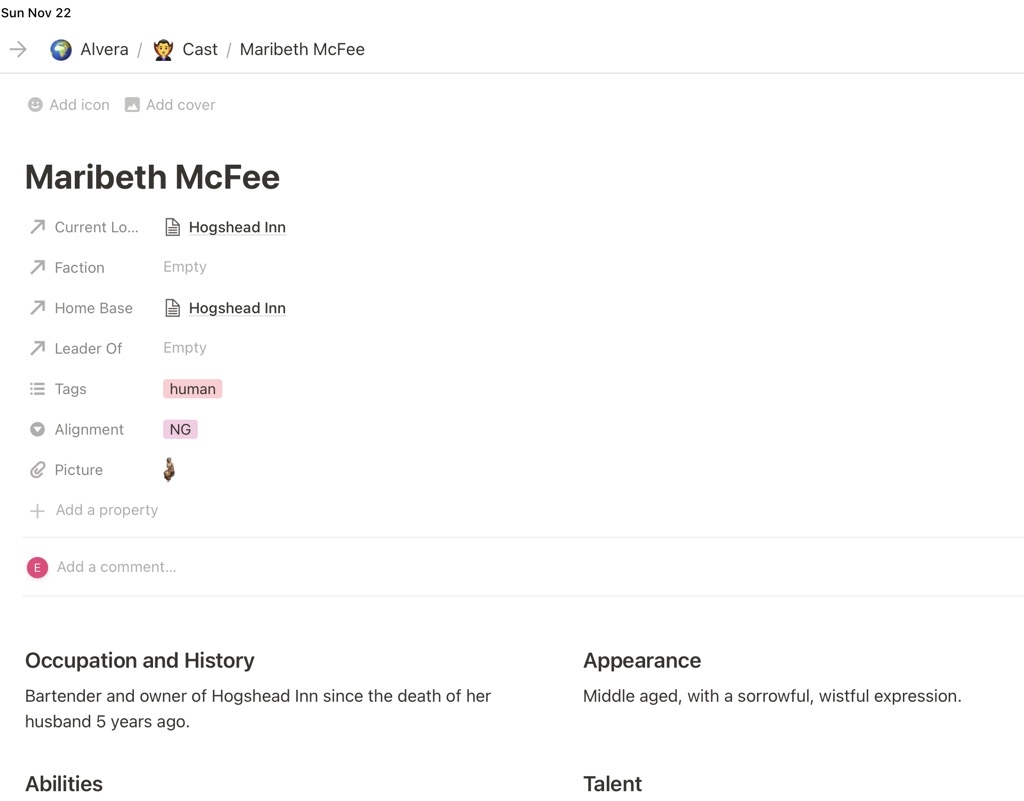
NPC made by myself
Click to embiggenMonsters
For me, building good combat encounters is the hardest part of being a DM. They can be very hard to balance, and you don’t want to accidentally end up killing the entire party or make every encounter a pushover. I use Kobold Fight Club to help choose how many monsters the players should fight at once. To represent the monsters on the map, I use Token Stamp to change an image of a monster (or NPC) into a useful token.

A monster token generated by TokenStamp
Click to embiggenThe location the players are fighting plays a big role here, as you can add additional rooms or zones for players to travel to while fighting. Or you can have the monster move through the environment differently then the players do, for example having a swimming monster while the players are on a boat. This forces the players to make more choices then “I run and hit it with my sword”.
I’ve found DMing to be an incredibly rewarding experience. You get to act, create whole new worlds and giggle with glee as your players struggle to solve a mind-bending mystery of your own devising. I hope my experiences here can help you start with your own adventures.
Resources There are a lot of resources for DMs out there (like so many), but I thought I’d share a few that had been most helpful for me.
Videos:
- Fixing GM Mistakes
- How to make the perfect high level boss fight
- Building NPCs
- Campaign Creation
- The Local Area
- Building an Exciting D&D Encounter
Articles:
- Introducing Encounters Seamlessly - Forum discussion on how to lead players into encounters
- Tips for a Novice DM
Other:
- 2 Minute Tabletop - Great source of mapping assets for use with DungeonDraft and WonderDraft